Crypto
Behind the facade of anonymous transactions and cybercriminals' preferred tool
Definition
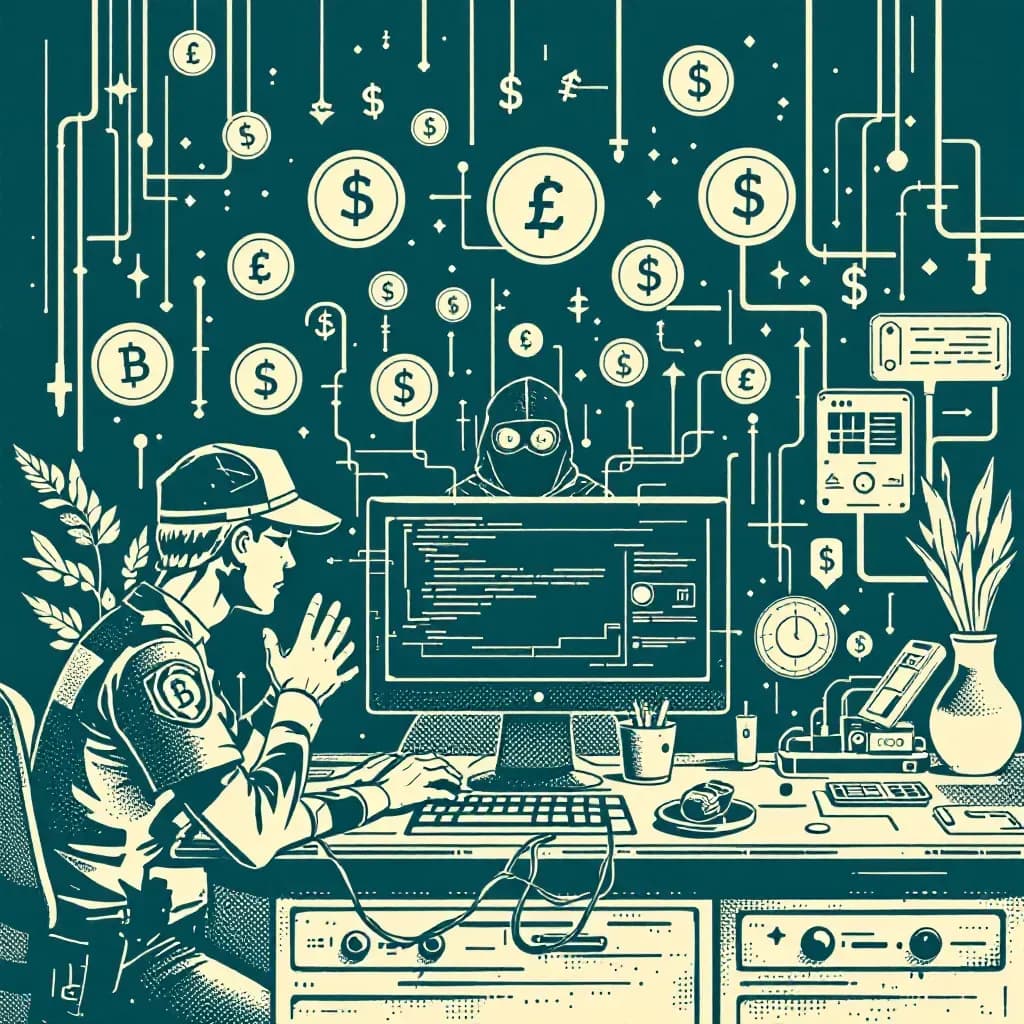
Crypto: More than digital currency – it's criminals' tool for extortion, money laundering, and illicit trade. Discover why it poses a huge challenge for the police.
Behind the facade of anonymous transactions and cybercriminals' preferred tool
Crypto: Digital currency a key tool on the dark web
Cryptocurrency, also known as crypto, refers to digital currencies that use cryptography for security. In the context of true crime, however, it is cryptocurrency's role in criminal transactions that is central. The potential for increased anonymity and its decentralized nature have made specific cryptocurrencies a preferred tool for perpetrators in various forms of financial crime and other illegal activities. This includes trading illegal goods and services on the dark web, advanced money laundering of criminal proceeds, and as a widespread means of payment in extortion cases, including ransomware attacks where perpetrators encrypt and withhold victims' critical data.
The hunt for digital traces: crypto-crime complexity
Investigating crimes involving cryptocurrency presents authorities worldwide with a particularly complex and resource-intensive task. Although transactions on most blockchains are, in principle, public and traceable, it is often a major challenge to link the digital wallets used to the real identities behind criminal acts. Criminal actors frequently use advanced obfuscation methods, including 'mixing services' (also known as tumblers), which co-mingle funds from various sources to make tracing difficult, as well as privacy-focused cryptocurrencies (privacy coins) specifically designed to enhance anonymity. These methods place significant demands on investigators' technical expertise in blockchain analysis and cybercrime, as well as on close international cooperation to effectively follow digital trails and money flows across borders.
Cryptocurrency's double-edge: knowledge vs cybercrime
A thorough understanding of cryptocurrency and its function in today's criminal economy is essential. This is crucial not only for solving specific crimes but also for developing effective strategies against new forms of cybercrime that continually emerge in the digital domain. The complex and dynamic nature of cryptocurrency means that combating its misuse will remain an ongoing challenge for law enforcement agencies and society at large, as the technology holds inherent potential for both positive innovation and criminal exploitation.
What does crypto misuse look like in practice? See how criminals use it for extortion and international money laundering. Read our harrowing case studies on the topic below.
Weiterlesen
Celsius-Gründer Alexander Mashinsky wegen Kryptobetrugs verurteilt
Alexander Mashinsky, Gründer von Celsius Network, wurde am 8. Mai 2025 zu 12 Jahren Haft verurteilt. Er hatte Kunden über die Sicherheit ihrer Einlagen getäuscht und den Kurs des plattformeigenen Tokens manipuliert.
570 Millionen Euro bei Binance-Hack gestohlen
Am 4. Oktober 2022 stahlen Cyberkriminelle rund 570 Millionen Euro von der Kryptobörse Binance. Die Täter nutzten eine Sicherheitslücke in einer Smart-Contract-Brücke aus. Bis heute ist niemand identifiziert.
Camorra: Neapels blutige Mafia kontrolliert Europas Unterwelt
Die Camorra aus Napoli ist eine der mächtigsten Mafiaorganisationen Italiens. Seit 2005 kontrolliert sie weite Teile des europäischen Drogen- und Waffenhandels und hat ein globales Netzwerk aufgebaut, das bis nach China, Russland und in die USA reicht.
Verwandte Artikel

Krypto-Betrüger gab sich als Milliardärssohn aus
Ein Mann erschlich sich das Vertrauen zahlreicher Opfer, indem er sich als Sohn eines Milliardärs und Krypto-Genie ausgab. Die Podcast-Serie 'Catch Me If You Ken' enthüllt die Geschichte eines raffinierten Betrugs.

Celsius-Gründer Alexander Mashinsky wegen Kryptobetrugs verurteilt
Alexander Mashinsky, Gründer von Celsius Network, wurde am 8. Mai 2025 zu 12 Jahren Haft verurteilt. Er hatte Kunden über die Sicherheit ihrer Einlagen getäuscht und den Kurs des plattformeigenen Tokens manipuliert.

570 Millionen Euro bei Binance-Hack gestohlen
Am 4. Oktober 2022 stahlen Cyberkriminelle rund 570 Millionen Euro von der Kryptobörse Binance. Die Täter nutzten eine Sicherheitslücke in einer Smart-Contract-Brücke aus. Bis heute ist niemand identifiziert.

Camorra: Neapels blutige Mafia kontrolliert Europas Unterwelt
Die Camorra aus Napoli ist eine der mächtigsten Mafiaorganisationen Italiens. Seit 2005 kontrolliert sie weite Teile des europäischen Drogen- und Waffenhandels und hat ein globales Netzwerk aufgebaut, das bis nach China, Russland und in die USA reicht.

Chinesische Militärhacker stahlen Daten von 150 Millionen Amerikanern
Im Januar 2020 klagte die US-Justiz vier Mitglieder der chinesischen Volksbefreiungsarmee wegen des Equifax-Hacks von 2017 an. Sie stahlen sensible Daten von bis zu 150 Millionen Menschen – der größte staatlich gesteuerte Datendiebstahl der Geschichte.

Vier US-Amerikaner von Golf-Kartell in Mexiko entführt
Im März 2023 wurden vier US-Bürger in Matamoros, Mexiko, vom Golf-Kartell entführt, nachdem sie mit haitianischen Drogenschmugglern verwechselt wurden. Zwei der Opfer wurden getötet, zwei überlebten.

Mark Karpelès und der Mt. Gox-Zusammenbruch
Mark Karpelès, CEO der Kryptowährungsbörse Mt. Gox, wurde 2019 wegen Fälschung elektronischer Daten verurteilt. 2014 verschwanden 850.000 Bitcoins von der Börse – einer der größten Krypto-Skandale überhaupt.

7 Millionen Robinhood-Nutzer von Datenpanne betroffen
Am 3. November 2021 infiltrierte ein unbekannter Hacker die US-amerikanische Handelsplattform Robinhood durch Social Engineering und stahl Daten von rund 7 Millionen Nutzern.

610 Millionen Dollar nach Krypto-Hack zurückgegeben
Am 10. August 2021 stahl ein unbekannter Hacker rund 610 Millionen Dollar von der Kryptoplattform Poly Network. Kurz darauf gab er fast den gesamten Betrag zurück – einer der ungewöhnlichsten Fälle der Krypto-Kriminalität.

Die Bonanno-Familie: Ein Jahrhundert Mafia in New York
Die Bonanno-Familie gehört zu den fünf berüchtigten Mafia-Familien, die seit den 1930er Jahren die organisierte Kriminalität in New York City beherrschen. Ihre Geschichte ist geprägt von Macht, Expansion und brutaler Gewalt.

Twitch-Hack: Millioneneinnahmen von Streamern aufgedeckt
Ein massives Datenleck bei der Streaming-Plattform Twitch im Jahr 2021 legte die Einnahmen der 100 erfolgreichsten Streamer offen. Die gehackten Daten zeigten, dass die Top-Verdiener zwischen August 2019 und Oktober 2021 Millionenbeträge erwirtschaftet hatten.

WannaCry: Cyberangriff legte britisches Gesundheitssystem lahm
Am 12. Mai 2017 infizierte die Ransomware WannaCry bis zu 300.000 Computer in über 150 Ländern. Besonders drastisch traf es das britische Gesundheitssystem NHS: 19.000 Termine wurden abgesagt, Operationen verschoben. Ein junger Cybersicherheitsforscher fand die Notbremse.