Dismemberment
The ultimate desecration – motive, method, and the investigator's nightmare
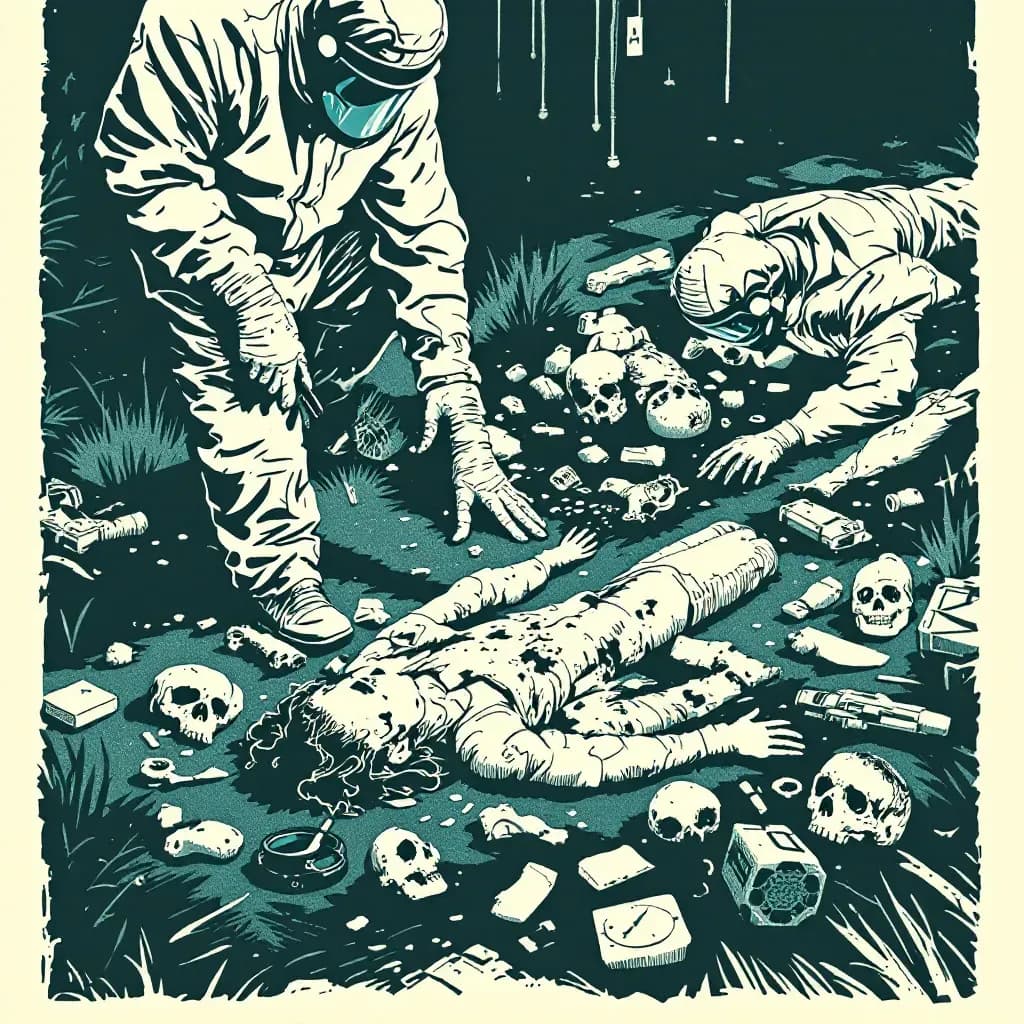
Definition
Dismemberment: The brutal act to conceal a murder. Understand the motive, the methods, and why it's an investigator's worst nightmare in true crime cases.
The ultimate desecration – motive, method, and the investigator's nightmare
What is dismemberment and what it reveals about killers
In true crime, dismemberment refers to the macabre act of dividing a body into multiple parts after death. This typically occurs as an attempt by the perpetrator to dispose of forensic evidence, hinder victim identification, or make it easier to transport and conceal the body. Dismemberment is rarely the cause of death itself but rather a subsequent act that indicates an often desperate or cold-blooded decision to erase traces of a serious crime, frequently a murder.
Dismemberment cases: A true nightmare for investigators
The motives behind dismemberment can be varied, but they almost always center on evading detection and thereby complicating the police investigation. By dividing the body, the perpetrator may attempt to scatter the body parts over a wider geographical area, significantly increasing the police's challenges in finding and assembling the victim. This can involve searches at multiple potential crime scenes or disposal sites. It can also be an attempt to make the body unrecognizable or fit it into smaller containers for easier disposal, such as by burial, submersion in water, or incineration. The act itself often requires a degree of either cold-bloodedness, panic, or a disturbed mental state, and the manner in which the dismemberment is carried out can sometimes provide investigators with faint clues about the perpetrator's background, possible connections to specific environments, or any special skills, which is crucial for the further investigation of the crime.
The shock of dismemberment: Key to the perpetrator’s psyche
For investigators, cases involving dismemberment present a range of special and complex challenges, particularly for forensic medical and criminal technical work. Victim identification can become extremely difficult if key parts such as the head or hands are missing or severely damaged, complicating the process of establishing a secure identity. Determining the precise cause of death can also be complicated, as the dismemberment itself can destroy important forensic clues related to the original violence or the primary crime scene. The discovery of dismembered body parts typically triggers extensive and resource-intensive searches to locate the rest of the body and any crime scenes where both the crime itself and the dismemberment may have occurred. The technical investigation of the dismemberment process itself, including the analysis of tool marks, is central to solving the case. Furthermore, the psychological burden on the involved investigators and forensic pathologists is considerable, and such cases often create widespread public unease and disgust, underscoring the heinousness of this type of crime.
Dismemberment therefore stands as one of the most disturbing aspects of violent crime, not only due to the inherent brutality of the act but also because of the severe consequences it has for solving the underlying crime, often a murder, and the sense of justice that is violated. It underscores the extreme lengths some perpetrators are willing to go to in their attempts to escape justice, and it remains a profoundly shocking reality and a persistent challenge for the legal system and forensic science in the world of true crime.
Did this spark your interest? Delve into real-life cases of dismemberment, from cold-blooded murders to desperate attempts to hide the crime – find our fascinating cases below.
Weiterlesen
The Richard Cottingham Case — The Torso Killer
Richard Cottingham is an American serial killer who murdered at least several women across New York and New Jersey, dismembering some victims — earning him the nickname 'The Torso Killer.'
Der Fall Elize Matsunaga — Mord und Zerstückelung in São Paulo
Der Fall Elize Matsunaga ist ein brasilianischer Mordfall, bei dem Elize Matsunaga im Mai 2012 ihren Ehemann Marcos Matsunaga in São Paulo erschoss und zerstückelte.
The César Román Case — Murder and Dismemberment in Madrid
The César Román case is a Spanish homicide in which businessman César Román murdered and dismembered his 25-year-old partner Heidi Paz Bulnes in Madrid in August 2018.
Verwandte Artikel

Dänische Mordfälle: Der Zerstückelungsmord in Thy
Der Podcast „Danske Drabssager“ taucht in den Zerstückelungsmord in Thy ein – einen der brutalsten und bekanntesten Kriminalfälle der dänischen Geschichte.
The Richard Cottingham Case — The Torso Killer
Richard Cottingham is an American serial killer who murdered at least several women across New York and New Jersey, dismembering some victims — earning him the nickname 'The Torso Killer.'
Der Fall Elize Matsunaga — Mord und Zerstückelung in São Paulo
Der Fall Elize Matsunaga ist ein brasilianischer Mordfall, bei dem Elize Matsunaga im Mai 2012 ihren Ehemann Marcos Matsunaga in São Paulo erschoss und zerstückelte.
The César Román Case — Murder and Dismemberment in Madrid
The César Román case is a Spanish homicide in which businessman César Román murdered and dismembered his 25-year-old partner Heidi Paz Bulnes in Madrid in August 2018.

Der Mord an Edwin Arrieta — Dismembering auf Ko Pha Ngan
Daniel Sancho Bronchalo ermordete und zerstückelte den kolumbianischen Chirurgen Dr. Edwin Arrieta im August 2023 auf Ko Pha Ngan, Thailand. Er wurde 2024 verurteilt.
Der Fall Peter Lundin: Mord und Zerstückelung in Rødovre
Der dänisch-amerikanische Mörder Peter Lundin tötete im Jahr 2000 seine Freundin Marianne Pedersen und ihre beiden Söhne in Rødovre. Ein Podcast-Special rollt den Schockfall neu auf.
Danske Drabssager: Der zerstückelte Rocker
Die Podcast-Episode von Danske Drabssager beleuchtet den makabren Fall des zerstückelten Rockers – eine Tat, bei der die Leichenteile des Opfers an mehreren Orten verteilt aufgefunden wurden.

Grausiger Fund in Londoner Kanalisation entlarvt Serienmörder
Am 8. Februar 1983 entdeckte ein Klempner im Londoner Stadtteil Muswell Hill menschliche Überreste in einem Abflussschacht. Die Spur führte zum schottischen Serienmörder Dennis Nilsen, der 15 Männer in seiner Wohnung getötet hatte.

Albert Fish: Serienmörder und Kannibale aus den USA
Albert Fish entführte 1928 die zehnjährige Grace Budd in Irvington, New York, ermordete sie und wurde später für mehrere Kindermorde zum Tode verurteilt.

Edmund Kemper: Der Co-Ed Killer aus Kalifornien
Edmund Emil Kemper III wurde im November 1973 für acht Morde verurteilt, die er zwischen Mai 1972 und April 1973 in Santa Cruz County, Kalifornien, beging. Der amerikanische Serienmörder zielte vor allem auf junge College-Studentinnen ab, die per Anhalter unterwegs waren.

Brutales Bruderschaf: Die dunkle Welt der Comanches MC
Die Doku-Serie „Brutalt Broderskab – Comanches“ zeigt, wie ein Kopenhagener Straßengang zur gefürchteten kriminellen Organisation wurde – und löst eine breite gesellschaftliche Debatte aus.