Stasi
The reign of fear in the GDR – surveillance, 'Zersetzung' and its crushing legacy
Definition
Stasi: Discover how the GDR's secret police systematically shattered lives through surveillance, informants, and the dreaded 'Zersetzung' tactic. A chilling legacy.
The reign of fear in the GDR – surveillance, 'Zersetzung' and its crushing legacy
State as perpetrator: Stasi's network of fear in the GDR
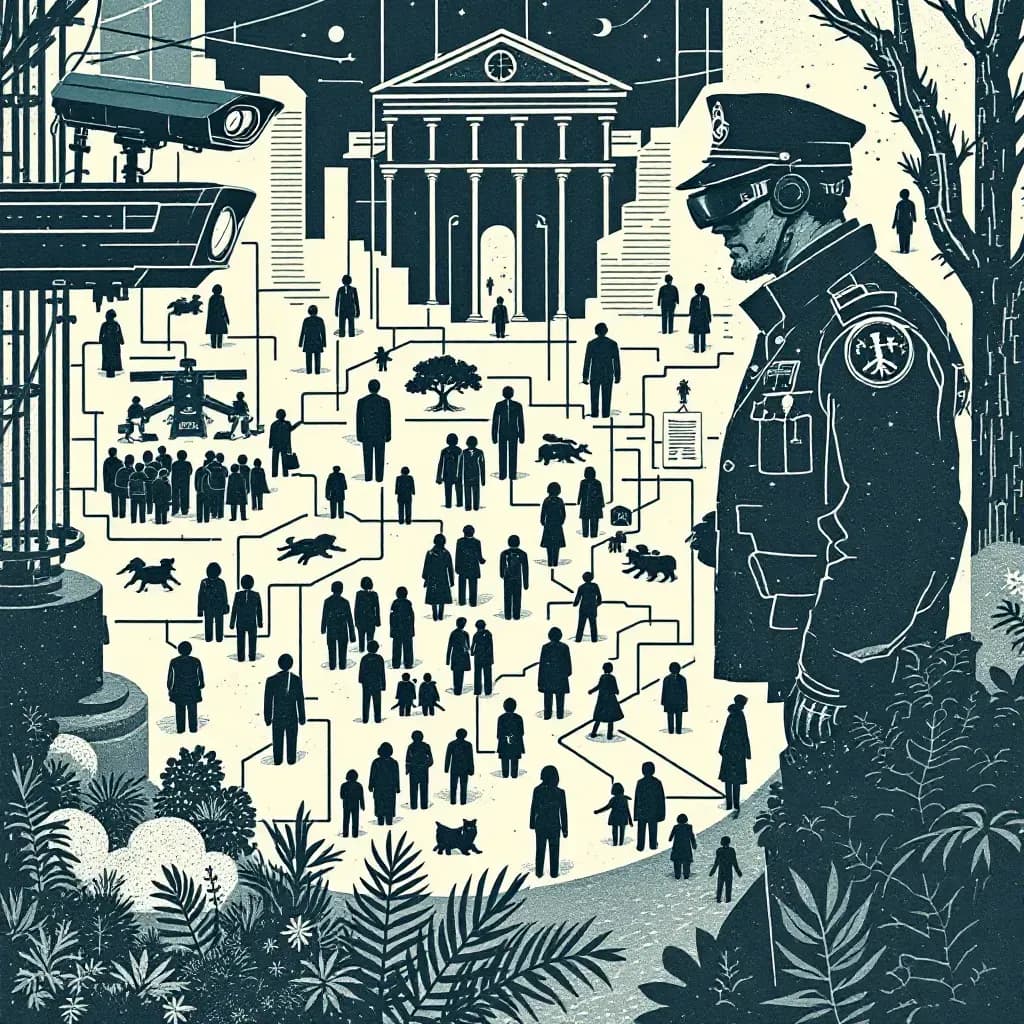
Stasi, an abbreviation for the German *Ministerium für Staatssicherheit* (Ministry for State Security), was the notorious and all-encompassing intelligence and security service in the former East Germany, also known as the GDR. Within true crime, the Stasi serves as a terrifying example of how a state can conduct systematic *surveillance*, *espionage*, and psychological warfare against its own population. Here, the lines between legitimate state power and criminal acts committed by the state itself were deliberately blurred. The core of the Stasi's power was a vast network of full-time officers and an even larger corps of unofficial *informants* – often ordinary citizens pressured or enticed into spying on friends, family, colleagues, and neighbors. This pervasive *surveillance* created a society characterized by fear and mistrust, where any deviation from the socialist state's official ideology could result in severe reprisals, including job loss, social isolation, imprisonment, and systematic psychological breakdown.
Stasi's feared weapon: How the terror of 'Zersetzung' worked
The Stasi's methods were numerous and deeply violated individual privacy. They included, among other things, routine mail opening, phone tapping, secret searches of private homes (known as "konspirative Wohnungssuchen"), infiltration of critical groups, and the use of the notorious "Zersetzung" tactic. *Zersetzung*, which can be directly translated as decomposition, was a particularly perfidious form of psychological warfare designed to slowly destroy a person's mental health, self-confidence, reputation, and social network through targeted rumor-mongering, manipulation, and organized harassment. The goal was often to induce severe *psychological* distress or even mental illness in the victims. Although these actions were carried out under the guise of protecting state security, many of them today constitute clear examples of serious crimes, such as stalking, defamation, severe *psychological violence*, and unlawful detention. Understanding the Stasi's operations is therefore essential to illuminate how a *totalitarian regime* can institutionalize behavior that violates fundamental *human rights* and operates within a criminal spectrum to maintain power.
Legacy of the Stasi: Archives on systematic state abuse
The investigation into the Stasi's extensive crimes, which truly gained momentum after the *fall of the Berlin Wall* in 1989, revealed a shocking system of state abuse and widespread lawlessness. The opening of the vast *Stasi archives* has documented countless personal tragedies and the devastating effect the Stasi's activities had on both individual lives and the general cohesion of society, underscoring the Stasi's significant relevance to the true crime genre. This is not merely about isolated criminal acts, but about a state's systematically organized crime directed against its own citizens. Access to the archives has given many victims painful insight into who betrayed them and how their lives were manipulated. At the same time, it has left a complex legacy of guilt, responsibility, and an enduring need to understand the mechanisms that enabled such a pervasive apparatus of repression in the heart of Europe during the *Cold War*.
The Stasi's methods were brutal – from 'Zersetzung' to extensive surveillance. Has this sparked your interest? Delve into real-life Stasi cases – find our fascinating case studies below.
Weiterlesen
Chinesische Militärhacker stahlen Daten von 150 Millionen Amerikanern
Im Januar 2020 klagte die US-Justiz vier Mitglieder der chinesischen Volksbefreiungsarmee wegen des Equifax-Hacks von 2017 an. Sie stahlen sensible Daten von bis zu 150 Millionen Menschen – der größte staatlich gesteuerte Datendiebstahl der Geschichte.
Schloss Colditz: Vom Adelssitz zum Ort des NS-Terrors
Schloss Colditz in Sachsen diente ab 1933 als frühes Konzentrationslager für politische Gefangene. Später wurden hier im Rahmen der NS-Euthanasie systematisch Menschen mit Behinderungen ermordet.
DeLorean: Vom Autoboss zum Kokain-Verdächtigen
John DeLorean, ehemaliger Topmanager bei General Motors, wurde am 19. Oktober 1982 in Los Angeles wegen angeblichen Kokainhandels verhaftet. Der Autobauer wurde später freigesprochen – das FBI hatte ihn in eine Falle gelockt.
Verwandte Artikel
True Crime Tour Dresden — Dunkle Geschichte an Elbe und Altstadt
Dresden bewahrt die Narben der Stasi-Diktatur bis heute. Eine Spurensuche durch Orte, an denen Überwachung und Unterdrückung real waren.

Chinesische Militärhacker stahlen Daten von 150 Millionen Amerikanern
Im Januar 2020 klagte die US-Justiz vier Mitglieder der chinesischen Volksbefreiungsarmee wegen des Equifax-Hacks von 2017 an. Sie stahlen sensible Daten von bis zu 150 Millionen Menschen – der größte staatlich gesteuerte Datendiebstahl der Geschichte.

Schloss Colditz: Vom Adelssitz zum Ort des NS-Terrors
Schloss Colditz in Sachsen diente ab 1933 als frühes Konzentrationslager für politische Gefangene. Später wurden hier im Rahmen der NS-Euthanasie systematisch Menschen mit Behinderungen ermordet.

DeLorean: Vom Autoboss zum Kokain-Verdächtigen
John DeLorean, ehemaliger Topmanager bei General Motors, wurde am 19. Oktober 1982 in Los Angeles wegen angeblichen Kokainhandels verhaftet. Der Autobauer wurde später freigesprochen – das FBI hatte ihn in eine Falle gelockt.

Hafnium: Chinesische Hacker legten Microsoft Exchange lahm
Im Januar 2021 nutzte die chinesische Hackergruppe Hafnium vier unbekannte Sicherheitslücken in Microsoft Exchange aus. Zehntausende Server wurden kompromittiert, bevor Microsoft am 2. März 2021 Patches veröffentlichte. Was folgte, war eine globale Welle aus Spionage, Datendiebstahl und Ransomware.

Nixons Geheimnis: Der 9-Millionen-Dollar-Bankraub
Am 27. März 1972 verübte Amil Dinsio mit fünf Komplizen einen der spektakulärsten Bankraube der US-Geschichte – mit angeblichen Verbindungen zu Präsident Nixon und Mafia-Boss Jimmy Hoffa.
Alfred Hinds: Der britische Houdini und seine legendären Ausbrüche
Alfred Hinds wurde wegen eines Juwelenraubs zu 12 Jahren Haft verurteilt. Er beteuerte stets seine Unschuld – und schockierte England mit spektakulären Gefängnisausbrüchen.