The Iceman Murders — New Jersey Contract Killer Case
Northern New Jersey, 1980–1984 | Solved
Veröffentlicht 7. Juni 2026
Alles zum Fall in den Medien
4 Dokus, Serien, Podcasts und Bücher zum Fall
Fakten
The Case
The Iceman Murders are a series of contract killings committed by Richard Leonard Kuklinski, a notorious New Jersey hit man who earned his nickname by freezing victims' bodies to obscure the time of death. Between 1980 and 1984, Kuklinski murdered at least five people in northern New Jersey, operating as a contract killer with alleged connections to organized crime. His case became one of the most sensational criminal investigations in New Jersey history, culminating in his arrest in December 1986 and subsequent convictions that would keep him imprisoned for the rest of his life.
Born on April 11, 1935, in Jersey City, New Jersey, Kuklinski grew up in an environment characterized by neglect and violence. This troubled upbringing would set the stage for a criminal career that spanned decades and, according to his own claims, involved far more victims than the five murders for which he was convicted. Britannica describes him as a serial killer who later claimed to have killed at least 100 more people as a Mafia hit man, though these claims remain unverified.
The Crime
Kuklinski's confirmed victims were Daniel Deppner, Gary Smith, George Malliband, Richard Masgay, and Paul Hoffman, all killed between 1980 and 1984. His methods varied widely, demonstrating a chilling versatility in murder techniques. He employed shooting, strangling, bludgeoning, and cyanide poisoning to kill his targets, adapting his approach based on the circumstances of each contract.
Zeitlinie
Richard Kuklinski geboren in Jersey City
Richard Leonard Kuklinski wird am 11. April 1935 in Jersey City, New Jersey, geboren.
Mordserie beginnt in New Jersey
Im Zeitraum ab 1980 begeht Kuklinski die Morde in New Jersey, für die er später gerichtlich verantwortlich gemacht wird. Die Opfer sind George Malliband, Louis Masgay, Daniel Deppner, Paul Hoffman und Gary Smith.
Mordserie endet
Der letzte der fünf gerichtlich festgestellten Morde in New Jersey ereignet sich im Laufe des Jahres 1984.
Festnahme am New Jersey Turnpike – Operation Iceman
Am 17. Dezember 1986 wird Kuklinski bei einer geplanten Lastwagenkontrolle am New Jersey Turnpike festgenommen, als Abschluss der koordinierten Polizeioperation mit dem Namen Operation Iceman.
Erste Verurteilung in Hackensack
Kuklinski wird 1988 vom New Jersey State Court in Hackensack verurteilt und zu mehreren aufeinanderfolgenden lebenslangen Freiheitsstrafen verurteilt.
Weitere Verurteilung 2003
Im Jahr 2003 wird Kuklinski erneut im Zusammenhang mit den gerichtlich festgestellten Morden in New Jersey verurteilt, was die zuvor verhängten lebenslangen Freiheitsstrafen ergänzt.
Kuklinski stirbt im Gefängnis in Trenton
Am 5. März 2006 stirbt Richard Kuklinski im Gefängnis in Trenton, New Jersey. Der Fall ist damit endgültig abgeschlossen.
The killer's most distinctive trademark was his use of freezing to manipulate forensic evidence. Kuklinski would store bodies in a freezer for extended periods before disposing of them, making it nearly impossible for investigators to determine the actual time of death. This macabre practice earned him the moniker "The Iceman" and demonstrated a calculating approach to avoiding detection.
Disposal methods were equally varied and calculated. Bodies were hidden in mine shafts, dumped in rivers, or left in remote locations where discovery might be delayed. This geographic dispersal of victims and variation in disposal methods initially prevented investigators from connecting the murders to a single perpetrator.
Kuklinski operated primarily as a contract killer, accepting assignments allegedly from organized crime figures. His willingness to kill strangers for money, combined with his methodical approach to covering his tracks, made him a particularly dangerous criminal. The murders occurred across northern New Jersey, centering in areas where Kuklinski maintained connections and knew the terrain well enough to avoid detection.
The Victims
The five confirmed victims represented different aspects of Kuklinski's criminal activities. Daniel Deppner and Gary Smith were among those killed during the early 1980s, their deaths part of what would become a pattern of violence that authorities struggled to piece together. George Malliband and Richard Masgay also fell victim to Kuklinski's brutality during this period.
Paul Hoffman's murder in 1980 would not result in charges until much later. Kuklinski pleaded guilty to Hoffman's killing in 2003, nearly two decades after the crime and fifteen years after his initial convictions. This delayed justice illustrated both the complexity of building cases against Kuklinski and the gradual process by which investigators connected additional crimes to the contract killer.
The sources available do not provide detailed biographical information about the victims, but their deaths shared common threads: all were connected in some way to Kuklinski's criminal activities or contracted killings, and all died violently at the hands of a man who showed no apparent remorse for his actions.
Investigation
The breakthrough in the Iceman case came through an elaborate undercover operation orchestrated by the New Jersey Organized Crime and Racketeering Task Force. ATF agent Dominick Polifrone assumed the alias Dominick Provenzano and posed as a mobster, gradually gaining Kuklinski's trust over an extended period.
Polifrone's undercover work proved instrumental in building a prosecutable case. Through direct contact with Kuklinski, the agent gathered evidence of the killer's methods, mindset, and willingness to continue his murderous activities. Recordings captured Kuklinski discussing various killing techniques and planning what would have been future crimes, including a proposed cyanide poisoning scheme.
The investigation revealed Kuklinski's sophisticated understanding of forensic science and police procedures. His use of freezing to obscure time of death demonstrated awareness of how investigators establish timelines. His variation in killing methods and disposal sites showed deliberate efforts to prevent pattern recognition.
The Morris County Prosecutor's Office noted that the task force investigation not only led to Kuklinski's conviction but also produced information that helped answer questions about other victims' murders, suggesting the investigation's reach extended beyond the initial five confirmed cases.
Trial and Verdict
In March 1988, a New Jersey jury convicted Richard Kuklinski of four murders: those of Daniel Deppner, Gary Smith, George Malliband, and Richard Masgay. The prosecution presented evidence gathered through the undercover operation, forensic analysis, and witness testimony to establish Kuklinski's guilt beyond reasonable doubt. The court sentenced him to life imprisonment.
The 1988 trial represented a major victory for New Jersey law enforcement, successfully prosecuting a contract killer whose crimes had spanned years and multiple jurisdictions. The conviction removed a dangerous criminal from society and provided some measure of justice for the victims' families.
Fifteen years later, in 2003, Kuklinski pleaded guilty to a fifth murder, that of Paul Hoffman in 1980. This additional conviction came as investigators continued examining unsolved cases and building evidence connecting Kuklinski to previously unattributed crimes. The plea agreement added another life sentence to Kuklinski's existing punishment.
Throughout his incarceration, Kuklinski gave interviews claiming responsibility for more than 100 additional murders, though law enforcement could never verify most of these assertions. Some investigators believed he exaggerated his body count to enhance his notoriety, while others thought he might indeed have committed additional undetected murders during his decades-long criminal career.
Today
Richard Kuklinski died in prison on March 5, 2006, at age 70, having served eighteen years of his life sentences. His death ended one of New Jersey's most notorious criminal cases but did not resolve all questions surrounding his activities.
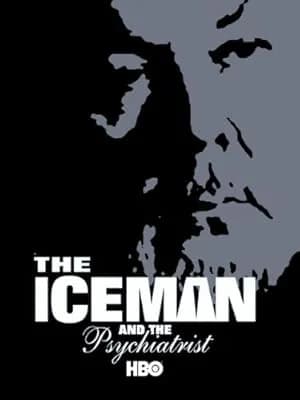
The Iceman case has generated substantial media attention over the years. HBO produced documentary series "The Iceman Tapes" in 1992 and 2001, featuring interviews with Kuklinski in prison where he discussed his crimes with disturbing casualness. A 2012 feature film starring Michael Shannon dramatized his life and crimes, bringing the case to wider public attention.
Law enforcement officials continue to reference the Iceman investigation as an example of successful undercover work and multi-agency cooperation. The Morris County Law Enforcement community has held meetings with principal investigators on the case, preserving institutional knowledge about investigative techniques that proved effective against a sophisticated criminal.
The case raises ongoing questions about the true extent of Kuklinski's crimes. While five murders were proven in court, his claims of more than 100 killings remain unverified. Some cold cases from the era continue to be examined for possible connections to Kuklinski, though the passage of time and his death make definitive answers increasingly unlikely.
The Iceman Murders stand as a stark reminder of how contract killers can operate for years before being caught, and how patient, methodical police work combined with innovative undercover operations can ultimately bring even the most calculating criminals to justice.
Zu diesem Fall fragen
Antworten nur aus der Berichterstattung von KrimiNytAlles zum Fall in den Medien
4 Dokus, Serien, Podcasts und Bücher zum Fall
TV-Serien



Diesem Fall folgen
Erhalte eine E-Mail, wenn eine neue Doku, ein Podcast oder ein Buch zu The Iceman Murders — New Jersey Contract Killer Case erscheint oder ein Urteil fällt.