Kriminalarkivet med Pops och Lampers
SVT Play, 2022 — Swedish true crime archive series covering terrorism and infamous heists
Fakten
What Is the Series About?
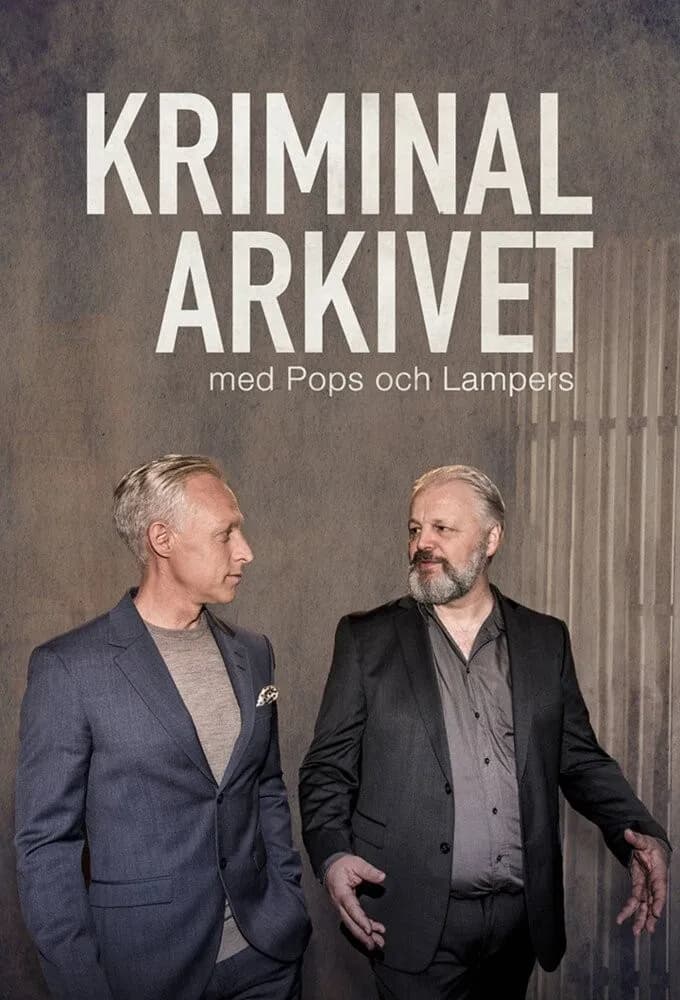
Kriminalarkivet med Pops och Lampers — loosely translated as The Criminal Archive with Pops and Lampers — is a Swedish true crime documentary series produced by SVT Dokumentär and released on SVT Play on May 19, 2022. Rather than following a single case across its full run, the series is structured as an archive-style deep dive into landmark Swedish criminal events, with each season dedicated to a distinct and historically significant case. Hosts André Pops and Lasse Lampers guide viewers through declassified footage, news archives, and contextual analysis, making the series feel as much like a history lesson as a crime documentary.
Season 1, subtitled Ambassaddramat, spans eight main episodes of approximately 19 minutes each, plus one bonus episode titled Kröcherligan. It examines the 1975 West German Embassy occupation in Stockholm — one of the most dramatic acts of international terrorism ever to unfold on Swedish soil. Season 2 shifts focus to the equally notorious Norrmalmstorg robbery of 1973, a case so psychologically complex that it permanently entered the global lexicon through the term "Stockholm Syndrome."
The Case: The 1975 West German Embassy Occupation
On April 24, 1975, at lunchtime, a cell of operatives from the Popular Front for the Liberation of Palestine (PFLP) stormed the West German Embassy at Wallingatan 4 in central Stockholm. The ringleader was Wolfgang Bödecker, operating alongside a man identified as Allan K. and two other unnamed Palestinian terrorists. The group took six embassy staff hostage in a calculated act of political violence, demanding the release of PFLP-linked prisoners held in West Germany.
The siege lasted approximately six hours and was remarkable not only for its audacity but for the fact that it unfolded in real time on Swedish television — making it one of the country's first live-broadcasted terrorist events. TV journalists captured the standoff as it developed, and their footage forms a central part of the documentary's archive material. Swedish police and the national security service SÄPO responded immediately, surrounding the building and beginning negotiations.
As the siege collapsed, the terrorists attempted to escape through embassy windows and were arrested shortly afterward near Oxenstiernsgatan. Crucially, no Swedish civilians were killed during the incident, although two shots were fired into the surrounding street and one police officer sustained minor injuries. The six hostages were released physically unharmed.
Trial proceedings were held at Stockholm City Court between 1975 and 1976. All perpetrators pleaded guilty, and the proceedings focused primarily on sentencing. Wolfgang Bödecker received a 10-year prison sentence — the maximum available under Swedish terrorism statutes at the time. He was released in 1983 and reportedly returned to Lebanon. His current whereabouts remain unknown, and no confirmed reports of his re-arrest or death have surfaced in open sources.
Other members of the cell were either released or deported after serving shorter terms.
Season 2: The Norrmalmstorg Robbery
While Season 1 anchors the series in international terrorism, Season 2 turns inward to examine one of Sweden's most psychologically studied crimes. In August 1973, Janne Olsson entered Kreditbanken at Norrmalmstorg square in Stockholm and took four bank employees hostage, demanding among other things that convicted robber Clark Olofsson be freed and brought to the scene. The ensuing six-day standoff produced a set of psychological dynamics between hostages and captors so unusual that Swedish criminologist Nils Bejerot coined the term "Stockholm Syndrome" to describe it. The series investigates the robbery, the hostage dynamics, and the legal proceedings that followed, with Olofsson's contested role remaining a subject of debate to this day.
Production
The series is produced by SVT Dokumentär, the documentary arm of Sweden's public broadcaster SVT. No individual director has been publicly named in available sources. The production's defining strength is its use of archival broadcast footage — particularly the live television coverage from April 24, 1975 — which gives viewers a visceral sense of how the events unfolded as ordinary Swedes watched them on the evening news. Hosts André Pops and Lasse Lampers bring an accessible but serious tone to the material, contextualizing decades-old events for a contemporary audience.
According to SVT Dokumentär's own social media, the hosts "take a closer look at well-known Swedish cases," framing the series as a curated criminal archive rather than a sensationalist retelling. The episodic structure — short runtime, archive-heavy format — reflects a clear editorial decision to let historical footage carry much of the narrative weight.
The first episode, titled "Ockupation," opens directly with the embassy takeover, while Episode 5, "Dom skjuter!" — "They're shooting!" — focuses on the dramatic escalation during the siege when shots were fired. The bonus episode, Kröcherligan, offers supplemental content connected to the broader criminal landscape of the era.
Reception
The series holds an IMDB rating of 8.2/10 based on 18 user ratings — a strong score reflective of a niche but engaged audience. Viewer commentary has praised the show's reliance on archival footage, its measured pacing, and the chemistry between Pops and Lampers. SVT Dokumentär described the series as "gripping true crime history" in promotional materials, and early responses from Swedish documentary forums echoed that assessment.
No major critical backlash or controversy has been reported in connection with the series. The primary complaint from viewers has been logistical rather than editorial: episodes were removed from SVT Play on October 30, 2022, significantly limiting public access. Some viewers have noted that the series deserves broader availability given its historical value as a document of Swedish crime and law enforcement history.
The series carries genre tags of True Crime, Documentary, History, and Swedish Crime on IMDB, and has been discussed positively in Swedish true crime communities as a reliable and well-sourced entry point into these cases.
The Cases Today
The 1975 West German Embassy occupation remains a landmark in Swedish security history, studied both as an early example of televised terrorism and as a test case for the country's anti-terrorism response protocols. Wolfgang Bödecker's post-release life is undocumented in open-source records, and no Swedish government body has issued updated public statements on his whereabouts.
The Norrmalmstorg case continues to generate debate, particularly around Clark Olofsson, who has remained a controversial public figure in Sweden for decades — appearing in media, writing memoirs, and contesting the legal characterization of his role in the 1973 robbery. The concept of Stockholm Syndrome, born from that siege, remains a fixture of psychological and criminological literature worldwide, though its clinical validity has been questioned by some researchers in recent years.
Both cases examined in Kriminalarkivet med Pops och Lampers stand as defining moments in Swedish criminal history, and the series provides one of the most accessible audiovisual treatments of either event available to a general audience.