Schuld und Sühne mit Paulina Krasa
ZDFinfo, 2021 — Ten real German criminal cases reconstructed by true crime journalist Paulina Krasa
Fakten
What Is the Series About?
Schuld und Sühne mit Paulina Krasa is a German true crime documentary series that premiered on ZDFinfo on 25 September 2021 and is available to stream on the ZDF Mediathek. Unlike many true crime productions that follow a single case across multiple episodes, this series takes a different approach: each of its ten episodes focuses on a completely separate, real German criminal case. The host and driving force behind the series is Paulina Krasa, a well-known German true crime podcaster and journalist who personally reconstructs each case, walking viewers through the evidence, the investigation, and the eventual legal outcome.
The title itself — Schuld und Sühne, meaning Crime and Punishment in German — is a deliberate nod to Dostoevsky's classic novel, signalling the series' intent to explore not just the mechanics of crime but the moral and social weight that surrounds it. Each episode is described by critics and viewers as "fesselnd" (captivating), "gesellschaftskritisch" (societally critical), and "hintergründig" (deeply layered), suggesting the series reaches beyond sensationalism into genuine journalistic inquiry.
The series is produced by sendefähig GmbH and was also made available on a dedicated YouTube channel between June and November 2021, before settling permanently on ZDF's streaming and broadcast platforms.
---
The Cases
Verhängnisvolle Affäre — The Double Murder of Giorgina R. and Her Daughter
One of the most disturbing episodes covers the murder of Giorgina R. and her daughter Gun R. The perpetrator, identified publicly only as Gunner R., was a Georgian national who had been in an intimate relationship with Giorgina. The case drew the attention of both German and Portuguese police, with investigators initially debating whether the deaths were a tragic drowning accident or deliberate killings.
In 2012, the Munich Regional Court delivered its verdict: Gunner R. was convicted of double murder and sentenced to life imprisonment. The court went further, determining a special severity of guilt — a designation under German law that makes early release significantly less likely. Crucially, judges ruled that Gunner R. had killed his own daughter not out of rage or accident, but to eliminate evidence of the affair and protect his existing relationship. He remains in prison to this day.
Tödliche Idylle — Three Dead in Gifhorn
Another episode examines one of the more chilling escalations of everyday conflict in the series: a neighbourly dispute in the town of Gifhorn, Germany, that ended in three deaths in 2008. The man at the centre of the case, referred to as "General" Wilfried R., had been engaged in a prolonged feud with fellow members of a local garden community. The disputes were mundane in origin — arguments over lawn mowing, footpath use, and shrub disposal — but they festered into something far darker.
Detectives Jürgen Schmidt and Erwin Kaschner found a promising lead relatively quickly after the three bodies were discovered. Paulina Krasa reconstructs this case as a study in how social isolation and perceived injustice can metastasise into lethal violence within the most ordinary of community settings.
Das Skelett im Brunnen — The Skeleton in the Well
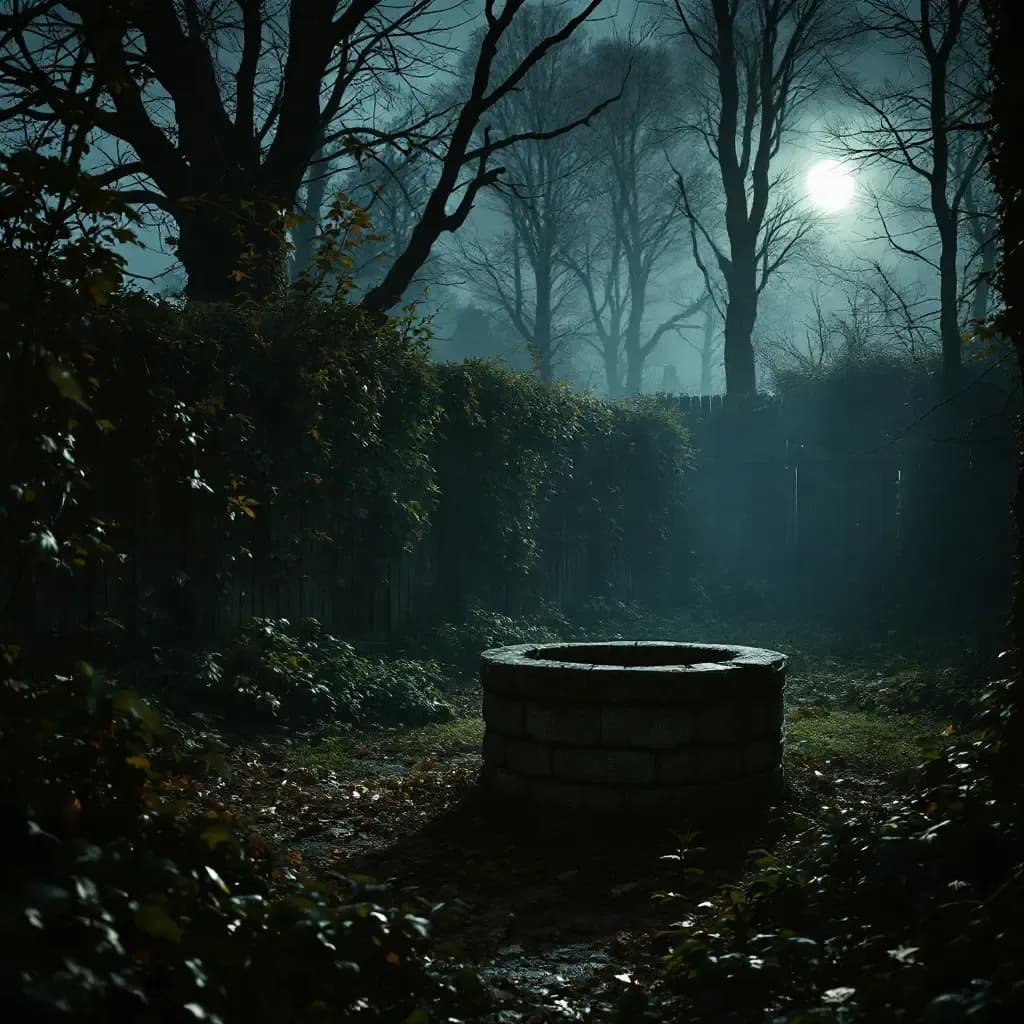
Among the more forensically complex episodes is Das Skelett im Brunnen (The Skeleton in the Well). Investigators discover a human skeleton concealed inside a well — with no missing person ever reported. The absence of a reported disappearance complicates identification and makes reconstructing the chain of events extraordinarily difficult. Krasa guides viewers through the forensic and investigative challenges posed by a case where even the identity of the victim was initially unknown.
Ein düsterer Verdacht — Der Fall Dorota G.
The episode Ein düsterer Verdacht — Der Fall Dorota G. examines the suspicious death of a woman identified as Dorota G. Full details of the case remain limited in publicly available sources, reflecting the series' careful approach to protecting the identities of victims and their families where legally or ethically necessary.
---
Production
The series is presented and fronted by Paulina Krasa, who built her reputation as a true crime communicator through her podcast work before transitioning into television documentary. Her journalistic background is evident in the series' structure: rather than relying purely on dramatised reconstructions, Krasa anchors each episode in verified case documents, court records, and investigative findings.
Production was handled by sendefähig GmbH, a German production company with a focus on factual and documentary content. According to production information published by sendefähig, the series was developed specifically for ZDF's true crime slate, which has expanded significantly in response to growing German audience appetite for the genre.
Episodes were released across platforms in a phased strategy: YouTube from June 2021 allowed early audience building, while the ZDFinfo broadcast premiere on 25 September 2021 brought the series to a wider television audience. The complete season of ten episodes is available via the ZDF Mediathek and sits within ZDF's broader true crime portal.
---
Reception
The series has not been listed on international databases such as IMDb, reflecting its position as a German-language public broadcaster production aimed primarily at domestic audiences. No formal IMDb rating exists for the series.
However, German-language viewer and critic responses describe the series in consistently positive terms. The adjectives most commonly applied — fesselnd (gripping), gesellschaftskritisch (socially critical), and hintergründig (nuanced) — suggest that audiences appreciate Krasa's approach of contextualising crimes within broader social and psychological frameworks, rather than presenting them as isolated acts of individual evil.
No controversies or complaints regarding the series' handling of victims or perpetrators have been reported in publicly available sources.
---
The Cases Today
For cases already adjudicated at the time of broadcast — such as the Gunner R. double murder conviction of 2012 — the legal outcomes remain unchanged. Gunner R. continues to serve his life sentence, with the court's finding of special severity of guilt meaning he faces a significantly higher bar for any future parole consideration under German law.
For cases still under investigation or review at the time of filming, the series does not claim to resolve open questions but instead presents the available evidence transparently, leaving viewers to weigh the facts. This approach has been seen as one of the series' strengths — it treats its audience as capable of engaging with ambiguity rather than demanding a neat conclusion to every episode.
The series stands as part of a wider resurgence of long-form true crime documentary content on German public broadcasting, and Paulina Krasa's work on Schuld und Sühne has solidified her position as one of the most prominent voices in German true crime journalism.