The Outreau Case: A French Nightmare
Netflix, 2024 — The story of France's most devastating judicial disaster
Fakten
What Is the Series About?
The Outreau Case: A French Nightmare is a Netflix documentary series that revisits one of the most catastrophic judicial disasters in modern French history — a case in which 17 adults were accused of sexually abusing and prostituting 18 children in the small working-class town of Outreau, near Boulogne-sur-Mer in northern France. The four-episode series, released on March 15, 2024, under the original French title Outreau: Un cauchemar français, traces the full arc of the affair: from the initial abuse allegations in the late 1990s, through the snowballing accusations, mass arrests, sensational trial, wrongful convictions, and eventual exonerations that shook France to its core.
Rated TV-MA and directed by four filmmakers — Oron Adar, Anna Kwak (known for Who Killed Little Gregory?), Camille Le Pomellec, and Marika Mathieu — the series does not function as a straightforward crime procedural. Instead, it serves as a forensic examination of how an entire legal and media system can catastrophically fail the people it is meant to protect: both the genuine child victims of abuse, and the adults who were falsely accused and had their lives destroyed in the process.
The Case
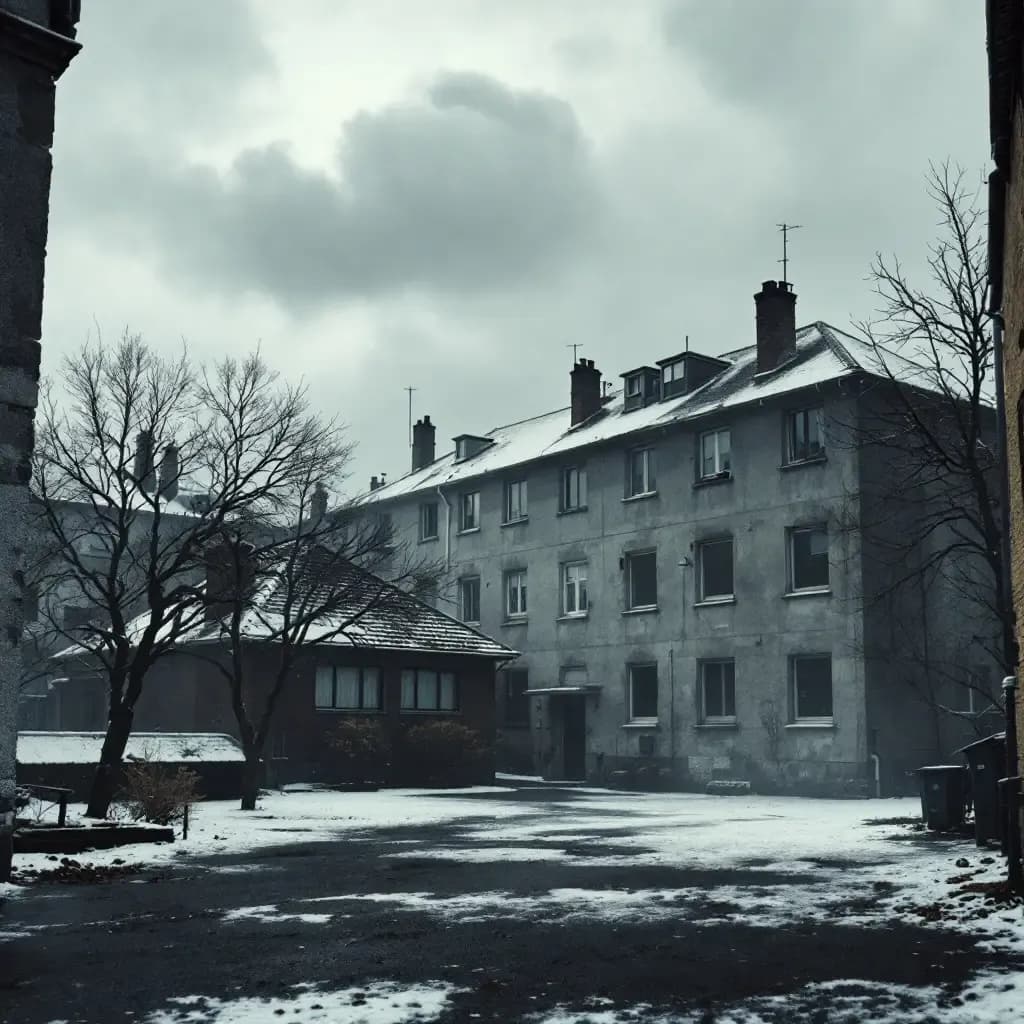
The Outreau affair began with what investigators initially believed was a contained case of intrafamilial sexual abuse. Myriam Badaoui, a mother of four living in the Marais de Tilques housing estate in Outreau, confessed to sexually abusing her own children alongside her partner. What followed, however, was a cascade of accusations that would engulf an entire community.
Badaoui began naming additional perpetrators: neighbors, friends, a local priest, a taxi driver, a court bailiff. In total, 17 adults were accused of participating in a pedophilia ring that allegedly abused 18 children between 1997 and 2000. Mass arrests followed. The accused sat in pre-trial detention — in some cases for years — while the investigation dragged on under the supervision of Judge Fabrice Burgaud, a young examining magistrate who became the central symbol of the judiciary's failures in this case.
The investigation was riddled with flaws from the start. Accusations were built almost entirely on testimony — much of it coerced or extracted from children under suggestive questioning — with little to no corroborating physical evidence. The media amplified the worst assumptions, and public opinion condemned the accused long before any verdict was reached. When the trial finally concluded, 10 of the 17 accused were convicted.
But the case did not hold. On appeal, six of those convicted were exonerated as the evidentiary basis for the accusations crumbled. Myriam Badaoui herself later retracted key portions of her testimony, acknowledging she had fabricated claims against people who had nothing to do with the abuse of her children. The individuals she had falsely accused had already lost years of their lives to prison, had their reputations annihilated, and in some cases suffered irreparable psychological damage. At least one of those wrongfully accused died while the case was still unresolved.
The fallout was seismic. In 2006, France's National Assembly convened a special parliamentary commission — broadcast live on television — in which Judge Burgaud was interrogated for hours by legislators demanding answers. The hearings became a landmark moment in French legal history, exposing the dangers of unchecked investigative power, inadequate oversight of examining magistrates, and the ease with which mass hysteria can overwhelm due process.
Production
The series brings together four directors whose backgrounds span investigative journalism and documentary filmmaking. Anna Kwak previously directed Who Killed Little Gregory?, Netflix's acclaimed French true-crime series about another decades-old unsolved case, giving her particular credibility in navigating the sensitivities of French judicial scandals. The team reportedly conducted extensive interviews with multiple parties, including some of the exonerated defendants, exploring not just the facts of the case but the human cost of what happened.
The documentary's approach is methodical rather than exploitative. Reviewers have praised its effort to present a balanced perspective — acknowledging the reality of abuse suffered by the children at the center of the case while simultaneously exposing the machinery of false accusation that destroyed the lives of innocent adults. The series does not shy away from the complexity of the situation: there were real victims, real crimes, and real perpetrators — but the system's response metastasized far beyond what evidence could support.
Reception
The series debuted to strong viewership numbers on Netflix. According to available data, it accumulated 4.4 million viewing hours in its first three days and ranked #9 among Netflix's top non-English shows in its opening week — a significant achievement for a four-part French-language documentary series.
Critical reception has been broadly positive, with the series earning praise for its sensitive handling of deeply traumatic material and its rigorous examination of institutional failure. Critics described it as "well-made" and "gritty," commending the filmmakers for not reducing a complex tragedy to a simple villain-and-victim narrative.
Viewer reactions, as reflected in Reddit discussions and social media, have been more viscerally mixed. Some viewers called it among the most disturbing documentaries they had ever seen and stopped watching after the first episode due to the nature of the content. Others debated whether the series fully interrogates or partially obscures the deeper institutional failures at play. On IMDb, the series holds a rating of 6.4/10 based on approximately 1,500 votes — a score that likely reflects both the difficulty of the subject matter and the divide between those who appreciate its measured approach and those who wanted something more conclusive.
Decider's review offered a nuanced assessment, noting that the series succeeds most when it allows the participants to speak for themselves, letting the horror of both the original crimes and the subsequent judicial catastrophe emerge organically rather than through heavy editorial manipulation.
The Case Today
The Outreau case has never fully receded from French public consciousness. The six exonerated individuals received formal acknowledgment of their wrongful convictions, but the question of adequate compensation and rehabilitation has remained contentious. In 2021, one of the falsely accused men published a memoir about his experience, bringing the case back into national conversation and forcing a renewed reckoning with how France treats the victims of its own judicial errors.
Myriam Badaoui served a sentence for the abuse she admitted to committing against her own children. Judge Fabrice Burgaud faced disciplinary proceedings but was ultimately allowed to continue his legal career, a decision that drew sustained criticism from legal reform advocates and the families of the wrongfully accused alike.
The Outreau affair has since been incorporated into French legal education as a defining case study in the dangers of examining magistrate overreach, the fragility of testimony-based prosecutions, and the responsibility of media institutions during high-profile criminal proceedings. The Netflix series ensures that this cautionary tale now reaches a global audience — one that may recognize, in France's nightmare, the universal vulnerability of justice systems to the same catastrophic failures.