murder at sea
A descriptive term, not a legal category: homicide at sea and its evidence problems
Murder at sea is not an independent legal category in Danish criminal law, but a journalistic and popular expression describing cases in which a person dies at sea or on board a vessel under circumstances that raise suspicion of intentional killing. The legal core of such cases is normally homicide, governed by general criminal legislation rather than by any special maritime homicide provision.
The central legal difficulty in murder-at-sea cases is evidentiary. The sea rarely leaves traces: bodies can disappear, crime scenes are washed clean, and witnesses are scarce. This makes it hard to establish whether a death involved intentional killing, gross negligence or a pure accident — three legally very different conclusions with widely differing criminal consequences.
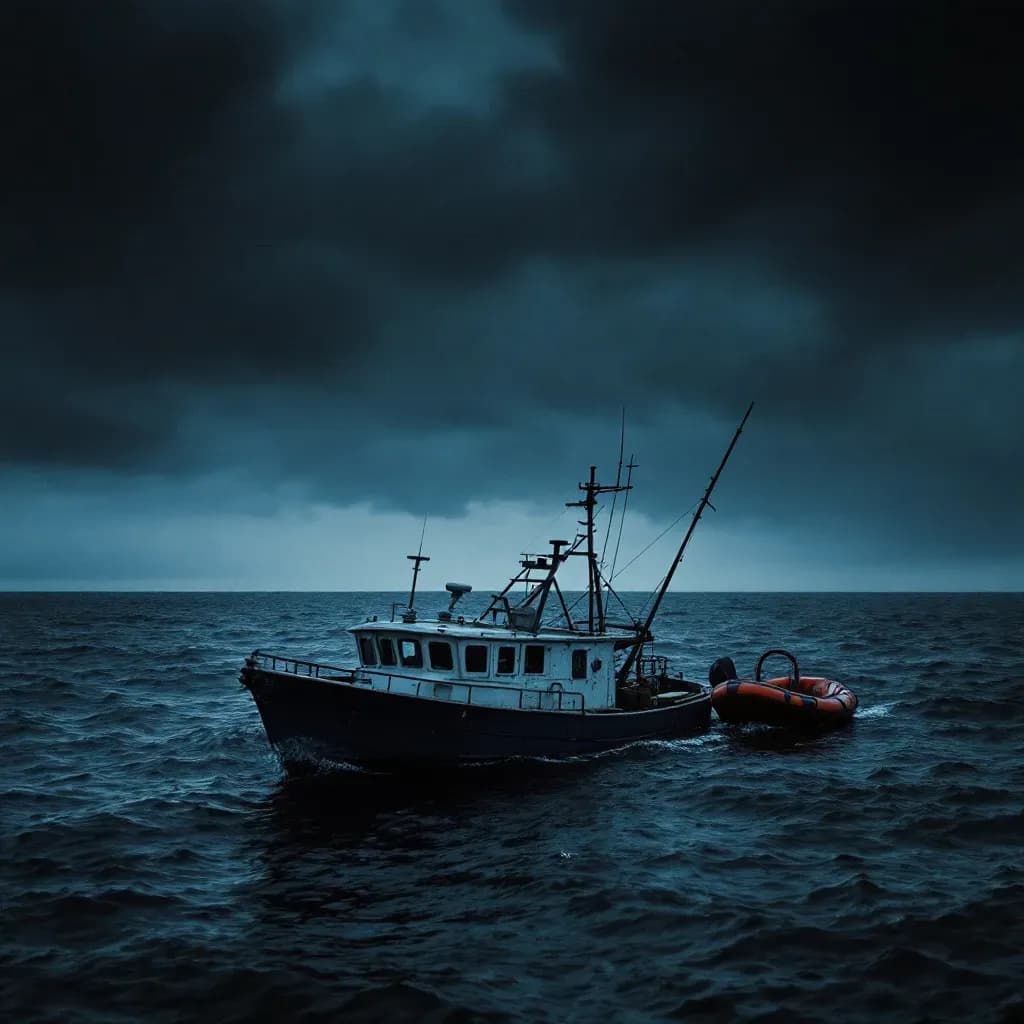
In a true crime context, the term is typically used for cases such as the Nathan Carman case, where a person loses their life on the open sea and the precise circumstances remain unresolved for a long time — or are never fully clarified. The combination of isolation, absence of witnesses and the sea as a natural burial ground for evidence makes these cases particularly complex investigative tasks.
Because the scene of the crime is the sea, questions of jurisdiction frequently arise: which state's law applies when a vessel is in international waters, in foreign territorial waters or sailing under a foreign flag? Under Danish law, questions about the territorial scope of criminal law are governed by the general rules on this point in the Danish Penal Code (straffeloven), but there is no separate provision specifically on murder at sea.
The concept therefore functions primarily as a descriptive category grouping together a type of case with shared factual features — a maritime setting, evidentiary uncertainty and often prolonged legal uncertainty — rather than as a precise legal term with its own legal content.