Escaping Utopia (Gloriavale)
TVNZ+, 2024 — Inside the systemic abuse and secret escapes from New Zealand's Gloriavale cult
Fakten
What Is the Series About?
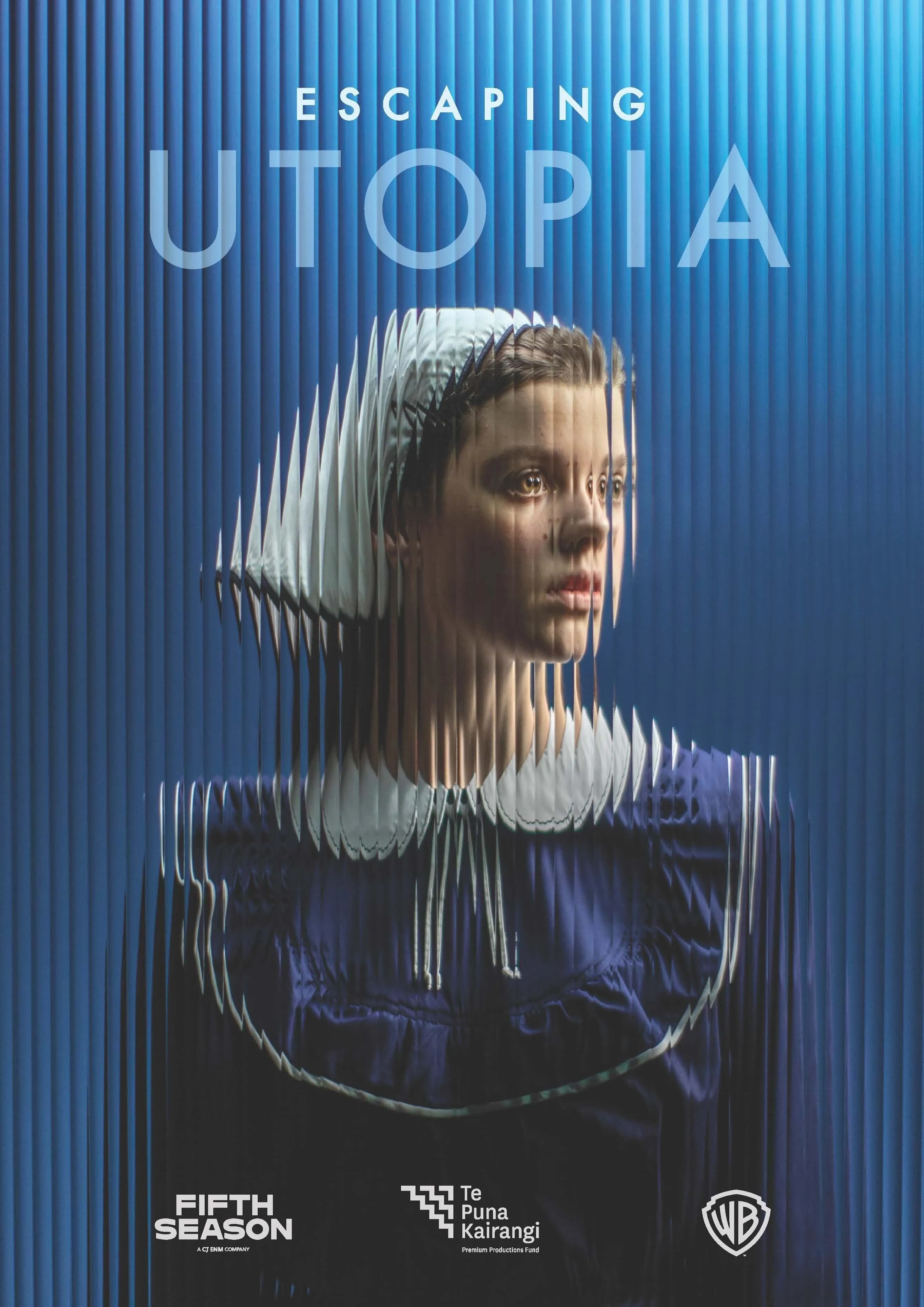
Escaping Utopia is a 2024 New Zealand true crime documentary series that exposes the systemic abuse, human rights violations, and secretive escape attempts within the Gloriavale Christian Community — a deeply isolated religious cult located on the West Coast of New Zealand. Spanning three hour-long episodes and directed by Britta Hawkins and Natalie Malcon, the series does not centre on a single criminal act or verdict but instead delivers a sweeping investigation into the culture of control, forced labour, and psychological abuse that has defined life inside Gloriavale for decades. It premiered on March 24, 2024, and was produced by Warner Bros. International Television Production New Zealand.
The series takes its name from the cruel paradox at the heart of its subject: Gloriavale was sold to its members — and to the outside world — as a Christian paradise, a utopia of faith, community, and purpose. For many of those born into it or drawn to it, however, it became a place of confinement, silence, and fear.
---
The Case
Gloriavale was founded by Neville Cooper, who renamed himself "Hopeful Christian", and built the community into a tightly controlled enclave where members surrendered personal autonomy, financial independence, and freedom of movement to the commune's leadership. Over decades, allegations of illegal confinement, forced labour, sexual abuse, and systematic psychological manipulation accumulated — yet the community retained its charitable status in New Zealand, a fact that became a major point of public outrage following the series' release.
There is no single perpetrator tried and convicted at the centre of Escaping Utopia; the series instead implicates the leadership structure of Gloriavale as a whole, with Cooper serving as the symbolic architect of the system of control. The crimes documented are systemic: children educated in isolation, women denied reproductive autonomy, and members punished or shunned for questioning authority.
The series features a number of former members who share their stories of clandestine escape planning — often carried out in secret over months, coordinating with family members on the outside. Among those featured are Zac Bell, Coco White, Shania Bailey Edmonds, and James Heaphy, several of whom had never spoken publicly before the documentary was made. Their accounts form the emotional and investigative backbone of the series, illustrating both the psychological grip of cult indoctrination and the extraordinary courage required to break free.
The documentary also tracks the external resistance movement — a growing coalition of former members, legal advocates, and journalists — that has been pushing for formal accountability for Gloriavale's leadership. While the series does not conclude with a dramatic court verdict, it documents the community's gradual disintegration under public and legal pressure throughout the 2020s.
---
Production
Directors Britta Hawkins and Natalie Malcon spent considerable time building trust with current and former Gloriavale members, gaining access to testimonies and personal accounts that had never previously been made public. The series was produced by Warner Bros. International Television Production New Zealand, reflecting significant institutional investment in the project.
The production team faced the inherent challenge of documenting a community that has historically been hostile to outside scrutiny. The result is a series that balances first-person survivor testimony with broader contextual investigation, weaving together individual escape stories into a coherent portrait of institutional abuse. A trailer released via Facebook previewed the series' intimate, testimonial-driven approach ahead of its premiere.
---
Reception
Escaping Utopia was met with strong audience engagement following its New Zealand debut. On IMDb, it holds a rating of 7.3 out of 10 based on 318 votes — a solid score for a documentary mini-series of this nature.
Reviewer response, particularly among documentary audiences, highlighted the series' ability to surface horrors that, while not surprising in the context of cult abuse, remained deeply disturbing in their specificity. As The Spinoff noted in its March 2024 review, the series reveals "a whole other level of 'what the hell'" to what New Zealand audiences already knew about Gloriavale — suggesting that even viewers familiar with the community's reputation were unprepared for what the documentary uncovered.
On Reddit's documentary community, viewers warned of the graphic nature of some disclosures while praising the series for platforming survivors who had been silenced for years. A recurring point of outrage in audience discussions was the revelation that Gloriavale retained its charitable status in New Zealand despite the scale of the abuses documented — a systemic failure that many viewers found as troubling as the abuses themselves.
Following its New Zealand debut, the series gained significant international traction. The BBC acquired the series for broadcast on BBC Two, marking a major expansion of its reach. It is also available via TVNZ Now and has been broadcast in multiple international markets.
---
The Case Today
The story of Gloriavale is not a closed chapter. As of the mid-2020s, the community continues to operate on New Zealand's West Coast, though under significantly greater scrutiny than at any previous point in its history. Legal cases brought by former members regarding labour rights and exploitation have proceeded through New Zealand's courts, with the Employment Court making landmark findings in favour of former members who argued they were employees — and therefore entitled to legal protections — rather than volunteers.
The charitable status of the Gloriavale community remains a live issue in New Zealand public discourse, with advocates and lawmakers continuing to call for its revocation in light of documented abuses. The leadership disintegration documented in the series has continued, and the community's membership has declined as more individuals have chosen to leave.
For survivors like those featured in Escaping Utopia, the series itself represented an act of public accountability — an opportunity to name, on the record, what was done to them and to warn others. The documentary stands as one of the most comprehensive investigations into Gloriavale yet committed to screen, and its acquisition by the BBC ensures that the community's history of abuse will reach a global audience for years to come.