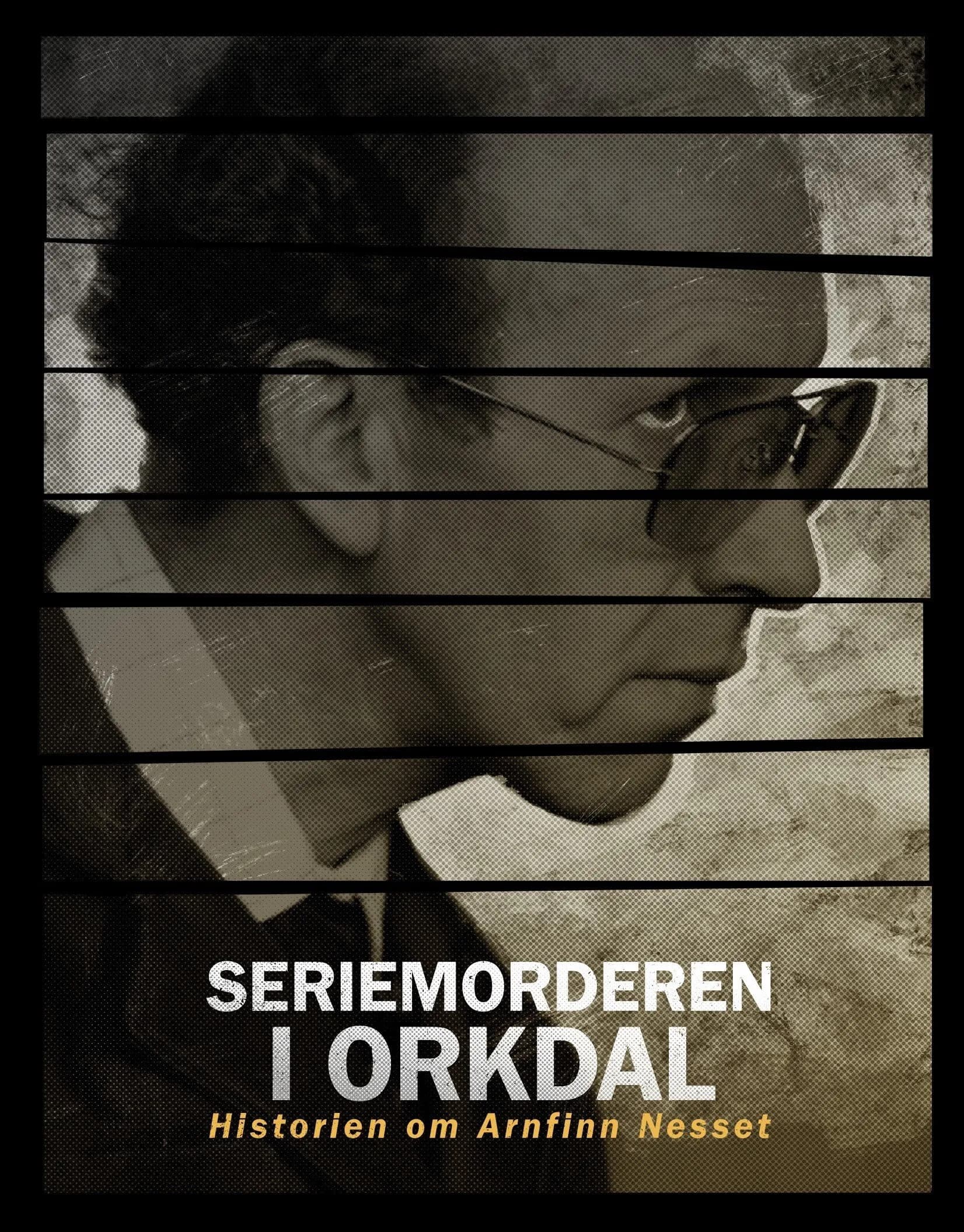
Seriemorderen i Orkdal
Plex, 2020 — Norway's worst serial murder scandal: nursing home killer Arnfinn Nesset
Fakten
What Is the Series About?
*Seriemorderen i Orkdal - Historien om Arnfinn Nesset* is a six-part Norwegian true crime documentary series that premiered on TV2 Norge on 8 January 2020 and is now available to stream on Plex. Directed by Fredrik Horn Akselsen and Astrid Layfield, the series examines what is widely regarded as Norway's worst serial murder scandal: the case of Arnfinn Nesset, a nursing home manager who poisoned at least 22 elderly patients with the respiratory-paralyzing drug Curacit during the late 1970s. Each episode runs approximately 43 minutes, and together they reconstruct the crimes, the investigation, the trial, and the enduring controversy surrounding a conviction built largely on the perpetrator's own contested confessions.
The Case
Arnfinn Nesset was employed as manager of Orkdal Syke- og Aldershjem, a nursing home in Orkdal, a small municipality in Trøndelag county, Norway. Between approximately 1976 and 1980, he is believed to have injected patients with Curacit, a muscle-relaxant capable of causing fatal respiratory paralysis. The victims were predominantly elderly residents of the facility, most estimated to be between 60 and 90 years of age.
Suspicions arose in 1980 after the nursing home recorded an abnormally high number of patient deaths. A formal investigation was launched, and according to Wikipedia's profile of Nesset, he was arrested in 1982. What followed was extraordinary: Nesset confessed to 31 killings across multiple interrogation sessions. However, prosecutors were ultimately able to secure convictions for only 22 of those deaths, as direct forensic evidence linking him to the others was insufficient.
The 1983 trial resulted in convictions on 22 counts of murder, as well as charges of attempted murder, embezzlement, and document forgery. Nesset received a sentence of 21 years in prison — the maximum term permissible under Norwegian law at the time. Debate has never fully subsided over whether the true victim count was significantly higher. Some investigators and researchers believe he may have killed as many as 138 people over the course of his career in healthcare, though this figure has never been legally established.
A key dimension explored in the documentary — and examined in depth in the book Den usannsynlige seriemorderen: Arnfinn Nesset og hans 31 tilståelser — is the reliability of those 31 confessions. Were they genuine admissions of guilt, or did the pressure of interrogation lead Nesset to confess to crimes he did not commit? The absence of direct forensic evidence makes this question impossible to answer definitively, and it remains one of the most troubling aspects of a case that shook Norwegian society to its core.
Production
The series was directed by Fredrik Horn Akselsen and produced by Astrid Layfield, who also shares a directing credit. TV2 Norge promoted the production as an in-depth examination of one of Norway's biggest criminal cases, positioning it alongside the global wave of serious true crime documentary filmmaking that had gained momentum through the mid-2010s.
The production features contributions from crime journalist Jens Christian Nørve and former Kripos (Norway's national criminal investigation service) investigator Asbjørn Hansen, both of whom bring investigative authority to the series. Their involvement signals that the filmmakers sought to move beyond surface-level retelling, engaging directly with the people who had worked the case or reported on it at the time.
The series draws on archival materials, contemporary interviews, and reconstructed context to place Nesset's crimes within the broader institutional failures that allowed them to continue undetected for so long. The fact that a healthcare professional in a position of trust could kill repeatedly without triggering alarm for years raises uncomfortable questions about oversight, patient vulnerability, and the culture of deference to authority within Norwegian elder care at the time.
Reception
The series holds an IMDb rating of 6.6 out of 10, based on 68 user votes — a modest but respectable score for a Norwegian-language documentary series with limited international distribution. Viewer responses have generally been positive, with audiences and critics praising the series for its thorough reconstruction of a deeply significant case and for the sober, investigative tone the directors maintain throughout.
The documentary reignited national discussion about the Nesset case in Norway, prompting renewed media coverage and renewed scrutiny of how a man in his position was able to operate without detection for so long. Critics noted that the series resists the sensationalism that can undermine true crime documentaries, instead prioritizing accountability and historical accuracy.
The central controversy — that a man was convicted of 22 murders largely on the basis of his own disputed confessions, with minimal forensic support — is handled with appropriate gravity. The filmmakers do not attempt to resolve it artificially, and that intellectual honesty is one of the production's genuine strengths.
The Case Today
Arnfinn Nesset was released from prison after serving his sentence and lived out the remainder of his life in relative obscurity. In a detail that carries its own grim irony, he died on 2 December 2025 at the age of 89 — in a nursing home. His death closed the last avenue for any further confession or clarification regarding the full scale of his crimes.
The question of how many people Nesset actually killed will never be definitively answered. The confirmed legal figure stands at 22. The upper estimate of 138 — derived from analyses of unexplained deaths during his career — has never been proven. What is certain is that he exploited one of society's most vulnerable populations, in a place of supposed safety, over a period of years.
The documentary series ensures that Norway does not quietly forget either the victims or the institutional failures that made Nesset's crimes possible. For international audiences, it stands as a stark reminder that serial killers do not always operate in the shadows of anonymity — sometimes they hold positions of authority, wear uniforms of care, and are trusted with the most defenceless lives imaginable.